Chote vs Toast: If You Run a Grocery, Not a Restaurant (2026)
July 14, 2026 - The Chote Team
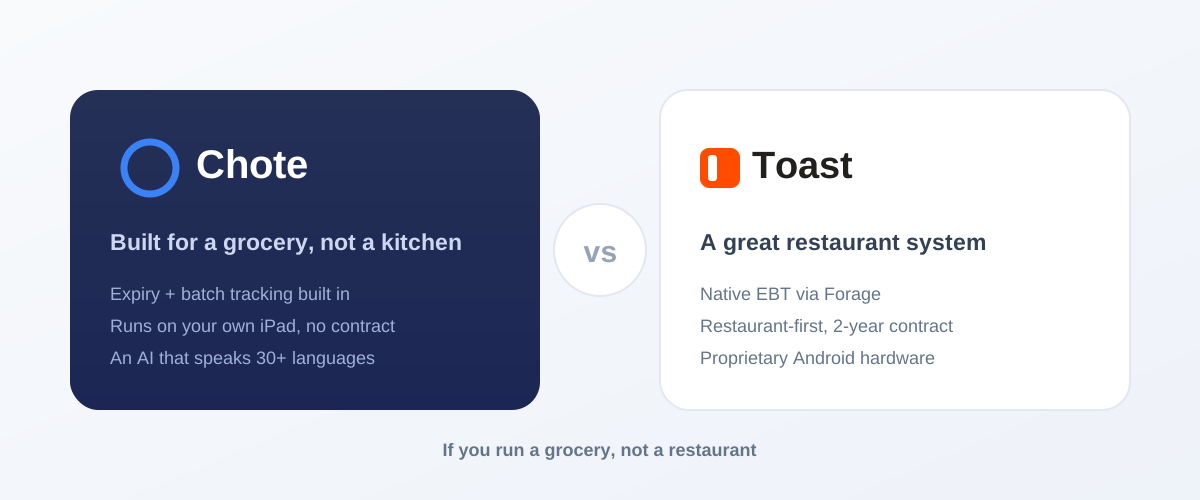
You have been looking at point-of-sale systems and Toast keeps coming up. That makes sense - Toast is everywhere, it has a real AI assistant, and it now handles SNAP EBT on the same terminal and even markets a grocery vertical. So why not just use it for the store? Because at its core Toast is a restaurant system, and your grocery is not a restaurant. That distinction matters more than you would expect.
 vs
vs 
- 171,000 - Toast locations (A huge ecosystem; restaurant-built, now with a grocery vertical)
- 2-year - Typical contract (Mandatory Toast Payments; rates can rise mid-term)
- $99/mo - flat, every feature (No contract, on hardware you already own)
| Chote | Toast | |
|---|---|---|
| SNAP EBT on one device | Yes - EBT and card in one transaction, no extra fee. | Yes - EBT via Forage on the same terminal, auto split-tender. |
| Expiry + FIFO tracking | Yes - Batch expiry and FIFO built in. | No - No batch/lot fields, no per-unit expiry, no FIFO. |
| Hardware | Your own iPad + iPhone (standard Apple). | Proprietary Android terminals; no iOS register. |
| Payments | Equinox terminal takes every card + EBT. | No - Mandatory Toast Payments; rates can rise mid-contract. |
| Contract | Yes - No contract; $99/mo flat. | No - Typically a 2-year term; ETF = remaining software balance. |
| AI assistant | Yes - Voice + text about your store in 30+ languages. | Yes - Toast IQ chat assistant. |
| Languages | Yes - 30+ languages, by voice or text. | Partial - UI in English, Spanish, French, Simplified Chinese. |
| Built for | Grocery and corner stores. | Restaurants first; now markets a grocery vertical too. |
Publicly listed rates, July 2026. Toast processing is 2.49% + $0.15 on the $69/mo plan, or a higher rate pay-as-you-go. Full source list at the end of this article.
What Toast gets right
Toast is mature software with roughly 171,000 locations, and its EBT is clean: it processes SNAP EBT through Forage on the same terminal as card, with automatic split-tender, per Toast's grocery materials1. Its Toast IQ assistant answers natural-language questions about margins and sales and can scan invoices. And if your store has a hot-food or deli counter, Toast can run the food-service side too - the one case where restaurant roots help you.
Where Toast leaves a plain grocery stuck
Restaurant hardware, mandatory payments, a 2-year contract
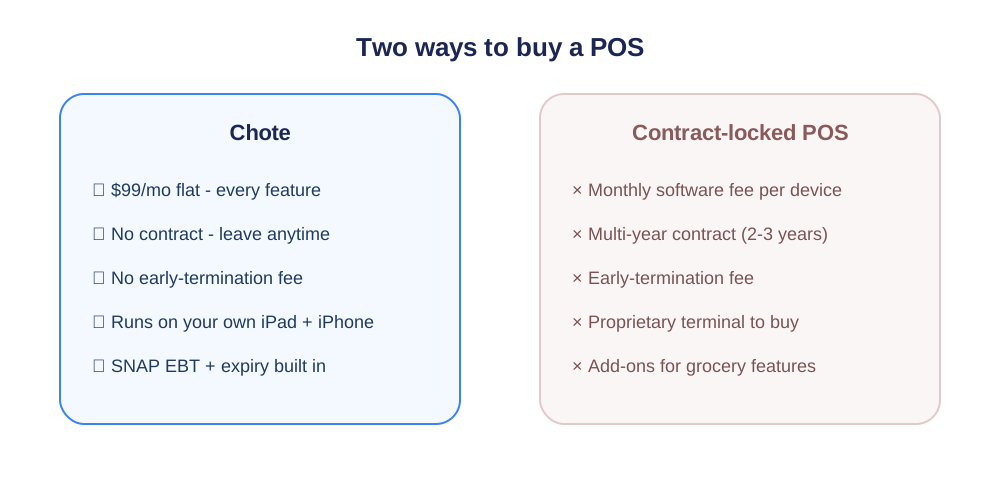
Toast runs on its own proprietary Android terminals - a countertop kit runs into four figures, and there is no iOS register, so you cannot use the iPad or iPhone you already own. Payments are mandatory Toast Payments2 (you cannot bring your own processor), and the standard term is about two years with an early-termination fee equal to the remaining software balance. That is a lot to commit before you know a restaurant system fits your grocery.
No expiry tracking for perishables
To its credit, Toast tracks SKUs and PAR levels and integrates with scales for weight pricing. But there are still no batch or lot fields, no per-unit expiry dates, and no FIFO. When a distributor drops 30 gallons of milk with a use-by date, Toast has no place to record which case expires first - the single gap that matters most for perishables.
What it costs in year one
Toast is priced per terminal, on top of proprietary hardware, mandatory Toast Payments, and a roughly two-year contract. Chote is $99 a month, flat, for every feature - on as many iPhones and iPads as you run. For a store that grows to a second or third register, that difference compounds fast, and it sits on top of Toast's mandatory processing, whose rates the company has raised before. With Chote you can bring your own processor, and the rate is matched or beaten.
Monthly software cost as you add registers
Toast's Point of Sale plan per terminal vs Chote's flat fee. Publicly listed July 2026 rates; excludes hardware and processing.
| 1 register | 2 registers | 3 registers | |
|---|---|---|---|
| Toast POS plan | $69 | $138 | $207 |
| Chote (flat) | $99 | $99 | $99 |
Toast's Point of Sale plan is $69/terminal/mo plus mandatory Toast Payments, proprietary hardware, and a ~2-year contract. Chote is $99/mo flat for unlimited iPhones and iPads, with EBT, expiry, labels, SMS, and 30+ languages included, hardware provided, and your card rate matched or beaten - and you can bring your own processor.
How Chote is different
Chote is new and iOS-only. It does not have Toast's installed base, ecosystem, or years of production history. What it has is a tight focus on exactly the kind of store Toast was not designed for.
- Runs on standard Apple hardware - an iPad at the counter, an iPhone app for the owner and staff - not a proprietary terminal. Free to start, no multi-year contract.
- SNAP EBT, credit, and debit on one device in one transaction - no second terminal, no extra monthly fee.
- Batch inventory with expiry dates: enter a batch, set the window (20 days for milk, 180 for canned goods), and get a warning before it expires. Toast does not do this.
- Barcode auto-fill tuned for desi, Arab, Hispanic, Asian, and African products - far less building SKUs by hand.
- An AI assistant in 30+ languages by voice or text: ask what sold this week while stocking shelves, in Urdu, even while driving to the cash-and-carry.
- QR-code receipts to pull a sale and issue a refund in seconds.
The honest call
Choose Toast if
- Your store has a food-service or deli counter that needs restaurant-side features.
- You need the deepest possible integrations ecosystem.
- You want a proven system and can absorb the hardware cost and 2-year commitment.
Choose Chote if
- You run a grocery, bodega, or corner store with no table service.
- Expiry tracking and batch receiving matter to your operation.
- Your staff speaks languages beyond English, Spanish, French, and Chinese.
- You want standard Apple hardware instead of a proprietary terminal and a long-term contract.
A grocery store should not have to buy a restaurant system to get a decent POS. That is what Chote is built around.
Sources
- Grocery Store POS System - Toast, accessed July 2026
- Restaurant POS Pricing & Plans - Toast, accessed July 2026
- Toast POS Review 2026 - NerdWallet, accessed July 2026
- Toast POS Pricing 2026 - POS USA, accessed July 2026
Frequently asked questions
Can Toast be used for a grocery store or bodega?
Toast can handle basic retail sales and EBT, and now markets a grocery vertical, but it was designed for restaurants. It lacks batch/lot expiry tracking, runs only on proprietary Android hardware, and requires a two-year contract. It works best for stores that also have a food-service or deli side that needs restaurant features.
Does Toast accept SNAP EBT?
Yes. Toast processes SNAP EBT through Forage on the same terminal as credit and debit, with automatic split-tender. That is a clean implementation and a genuine strength.
What is the main difference between Chote and Toast for a small grocery store?
Toast is a mature restaurant system that can serve grocery as a secondary use case. Chote is built specifically for independent and immigrant-owned grocery and corner stores - with expiry-date batch tracking, barcode auto-fill for international products, an AI assistant in 30-plus languages, and SNAP EBT on one Equinox terminal, all on standard Apple hardware with no proprietary lock-in and no long-term contract.
How much does Toast POS cost?
At the time of writing, Toast's software is publicly listed at $0 per month on a pay-as-you-go plan (with higher processing rates) or $69 per month for the Point of Sale plan. Hardware adds to that: the Toast Go handheld is listed at roughly $494 and a Flex countertop kit runs about $900 to $1,050. Toast Payments is mandatory, with card-present rates publicly listed at 2.49% plus $0.15 (hardware bought upfront) or 3.09% to 3.69% plus $0.15 (pay-as-you-go). These figures are from publicly listed pricing at the time of writing.
Does Chote work for stores that sell both groceries and hot food?
Not yet. Chote is currently built for grocery and retail, not food-service or restaurant operations. If your store has a deli counter or hot-bar that needs restaurant-style order management, Toast is the more complete option for that combination.
What languages does Toast support at the register?
Toast's interface is available in English, Spanish, French, and Simplified Chinese. Chote's AI assistant responds in 30-plus languages by voice or text, which is a significant difference for multilingual store environments.